
Finding the right therapist usually starts with the relief of being understood.
I am Mateo Leonardo, a Licensed Marriage and Family Therapist and Certified Sex Addiction Therapist in Long Beach. Born and raised in Madrid, working in English or Spanish, with men and couples on intimacy, trust and connection.
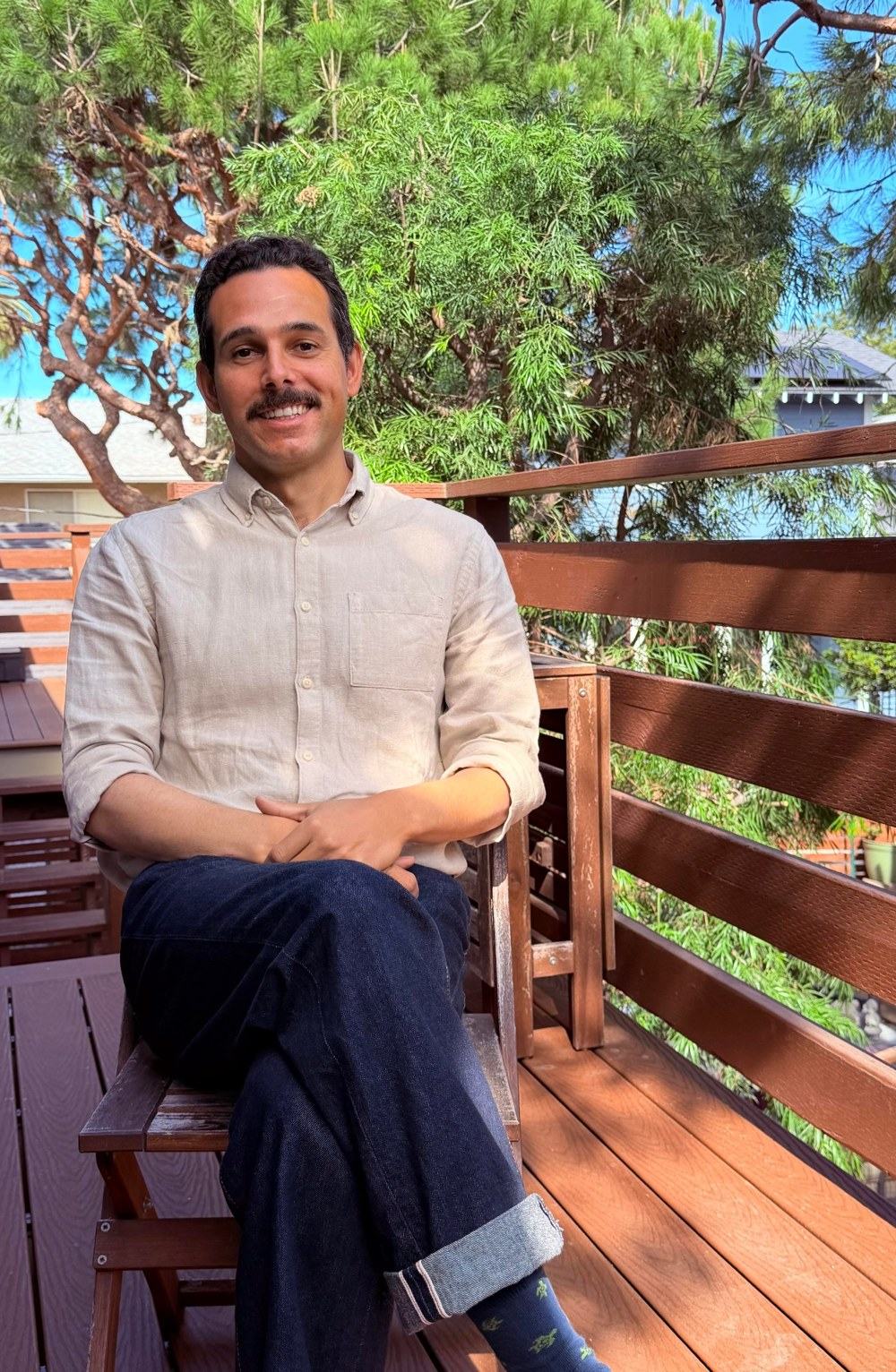
Mateo Leonardo, MA, LMFT, CSAT
Licensed Marriage and Family Therapist, California license #154119
Certified Sex Addiction Therapist
Se habla español
I specialize in helping men reclaim a life of integrity and purpose.
Finding the right therapist often starts with a sense of connection and the relief of being truly understood. With over five years of experience as a Licensed Marriage and Family Therapist and a Certified Sex Addiction Therapist, I specialize in helping men navigate the complexities of sexual behavior to reclaim a life of integrity and purpose.
My approach focuses on moving beyond the cycle of shame toward a grounded, healthy sexuality. Whether you are struggling with a specific behavior or feeling disconnected from your true self, I provide a compassionate, structured environment to help you rebuild trust with yourself and foster genuine intimacy in your relationships.
I am particularly passionate about working with men and couples, recognizing that healing thrives in the context of community and shared understanding. In addition to individual and couples work, I offer group support designed to reduce isolation and build the brotherhood necessary for long-term growth.
Outside of the therapy room, I stay grounded and find my own balance in the ocean; surfing is my personal practice for self-care and staying present. I bring that same commitment to presence and resilience into our sessions.
Madrid, Galicia, and the sea
I was born and raised in Madrid. My father’s family is from Galicia, on the northern coast of Spain, and a good part of my boyhood was spent around a small bar for fishermen there, among elders who worked with the sea. Nobody in that room talked about steadiness. They just had it, and you could tell it had been built rather than given. That is still where my idea of steadiness comes from.
My mother was a psychologist. Long before I had a word for it, I was around someone who paid close attention to people and took what she noticed seriously. I trace the way I listen back to her.
Arriving at thirteen, with no English
I moved to the United States at thirteen with my mother, leaving most of the family behind in Spain, and I spoke no English. I learned it the only way anyone does: by getting it wrong in front of people, over and over, until I stopped getting it wrong. That is where I learned adaptation, and it is not a story I tell as hardship. It is a story about adjustment: a set of skills built across countries, languages, careers and cultures, and the same ones I bring into the room.
I grew up American in every practical sense while carrying a Spanish and Galician upbringing underneath it, and later added England. I do not experience that as a divided identity. I experience it as fluency. If you are navigating identity, displacement, or the particular loneliness of straddling two cultures and belonging completely to neither, you will not have to explain that to me from the beginning.
Spanish is my first language, and sessions can be held in Spanish or English, or both, if that is how you actually think. Se habla español, and there is a página en español
Years inside systems that were not built for the people in them.
My BA is in Sociology, from Cal State Long Beach. Before I became a therapist I spent years in nine-to-five jobs in corporate America, which is where I learned how people cope, perform, and quietly wear down inside systems that were not built for them. A lot of the men I see now are doing exactly that, competently, for years at a time.
Then a master’s in Clinical Psychology at Antioch University, and the clinical training that followed. The sociology never really left; I still tend to look at the pressures around a man as well as the pattern inside him.
Long enough to be a local, not a visitor.
I lived in London for two years, and later in Madrid for two more, each time long enough to stop being a visitor and start being a local. That is a different experience from travel. You learn how a place expects you to behave, and you notice which parts of yourself you were keeping quiet in order to fit.
It is useful in this work more often than it sounds. Much of what men bring me is a version of the same question: which parts of me are actually mine, and which ones did I take on because the room asked for them.
Toxic shame keeps the behavior in place. So we start there.
Shame and secrecy are not side effects of out-of-control sexual behavior. They are the fuel. A man who believes he is fundamentally bad has no reason to be honest and every reason to escape. So the first thing I am after is not restraint. It is honesty, and a version of you that can tolerate being known.
From there the work is practical: what the behavior is being asked to do, what it costs, what actually meets that need, and what you want your sexuality to look like inside the life you are choosing. I help clients overcome toxic shame and discover healthy intimacy and connection. I help couples rebuild trust. I help men become genuine and authentic, and show up with integrity in their relationships.
I am direct. If something is not working I will say so, and I expect the same from you. That is easier to do in a room where nothing you bring gets a flinch.

Surfing is how I practice what I ask of you.
I surf, and I treat it as a discipline rather than a hobby, the same thing those Galician elders would have recognized in it. Sitting out past the break, you cannot rush anything. The set arrives when it arrives. You read conditions honestly, you respect what you cannot control, you time the effort instead of forcing it, and you accept that some of it will not go your way. Then you paddle back out.
That is close to what recovery of any kind actually asks: presence instead of control, timing instead of force, and the willingness to keep showing up after a bad one. It is also my own self-care, which matters. I do not think a therapist should be asking you to build a life he is not building himself.
Practically, it shows up as patience in session. We are not in a hurry, and we are not going to force a wave that is not there.

What I bring into the room
A BA in Sociology from Cal State Long Beach, and an MA in Clinical Psychology from Antioch University. I practice as a Licensed Marriage and Family Therapist in California, license #154119, with more than five years of clinical experience, and I am also a Certified Sex Addiction Therapist. Sessions in English or Spanish.
A substantial part of my practice is gay and bisexual men, and I work with straight, gay and bisexual men in the same way.
Cognitive Behavioral Therapy
Working with the thoughts and conditions that reliably precede a behavior, and building alternatives that hold under stress.
Psychodynamic work
Looking at where the pattern was learned (family roles, enmeshment, a narcissistic parent) so the present makes sense.
The Gottman Method
Structured couples work on conflict, repair attempts and the daily mechanics of trust.
Acceptance and Commitment Therapy
Making room for difficult feelings without acting on them, and choosing behavior by values instead of urgency.
Nonviolent Communication
Saying what you need without attacking or collapsing: the skill most men tell me they were never taught.
Group facilitation
Running a weekly men's group where honesty is normal, and isolation loses its grip.
I also work with men navigating mother-son enmeshment and the long effects of a narcissistic parent, which often sit underneath the intimacy difficulties that brought them in.
The things men ask me before deciding whether to book a consultation.
Frequently Asked Questions
Ask me anything you need to ask
A free 15-minute phone consultation is a low-stakes way to hear how I work and ask whatever you need to ask. No commitment, no intake paperwork.